

About 90% of antibiotics given in doctor’s offices are beta-lactam types. They are the top choice for fighting bacterial infections. As a pharmacist, I often get asked how long these drugs stay in our bodies. Knowing how long they last is key for keeping patients safe and stopping antibiotic resistance.
After you finish your antibiotics, your body starts getting rid of the leftovers. To learn more about how this works, check out this amoxicillin guide. It gives you the details you need to understand what happens after treatment.
Key Takeaways
- Beta-lactam antibiotics are mainly removed through the kidneys.
- Drinking plenty of water helps your body get rid of the medicine.
- How long it takes can vary depending on your kidney health and the dose.
- It’s important to finish all your antibiotics to avoid resistance.
- If you keep having side effects after treatment, talk to your doctor.
Understanding Amoxicillin and Its Pharmacological Profile
Amoxicillin is a key medicine used to fight many bacterial infections. Knowing how it works helps us understand how our bodies process and get rid of it.
Mechanism of Action in Bacterial Infections
At its core, amoxicillin is a bactericidal agent. It stops bacteria from making their cell walls, which they need to survive and grow.
The drug works by attaching to penicillin-binding proteins inside the bacteria. This stops the bacteria from building strong walls. Without strong walls, the bacteria burst and die.
“The clinical success of beta-lactam antibiotics like amoxicillin is fundamentally tied to their ability to maintain concentrations above the minimum inhibitory threshold for the duration of the treatment cycle.”
Standard Dosage and Administration Protocols
Doctors give amoxicillin based on strict rules to keep it effective. The body quickly breaks it down and gets rid of it. So, keeping the right amount in the blood is key.
Most dosage protocols call for taking it every 8 to 12 hours. This keeps the antibiotic levels high enough to fight off bacteria all day.
Sticking to this schedule is important. It makes sure the antibiotic keeps working until the infection is gone.
How Long Does Amoxicillin Stay in Your System After the Last Dose?
To figure out how long amoxicillin stays in your system, we look at how fast your body breaks it down. This antibiotic is water-soluble, so it’s processed quickly. This is different from other medicines.
Typical Elimination Windows for Healthy Adults
In healthy adults, how long amoxicillin stays in your system is pretty consistent. The kidneys work well to remove it from your blood. This happens mainly through urine.
Studies show how the body gets rid of amoxicillin:
- About 60% of the dose is in your urine in 6 to 8 hours.
- The rest is processed soon after.
- You’re usually clear of it by 12 hours after your last dose.
Variations in Clearance Based on Age and Weight
The 12-hour mark is a general guideline, but it can vary. Your body’s metabolism and organ function affect how fast it clears amoxicillin.
Age is a big factor, as kidney function changes over time. Babies and older adults might take longer to clear it because of their kidneys.
Your weight also plays a role in how the drug spreads in your body. Healthcare providers adjust doses based on this. They make sure the medicine works well and is cleared safely and quickly.
The Science of Half-Life and Drug Elimination
To understand the amoxicillin elimination timeline, we need to know about drug half-life. This key measure shows how fast a drug is broken down and leaves your blood.
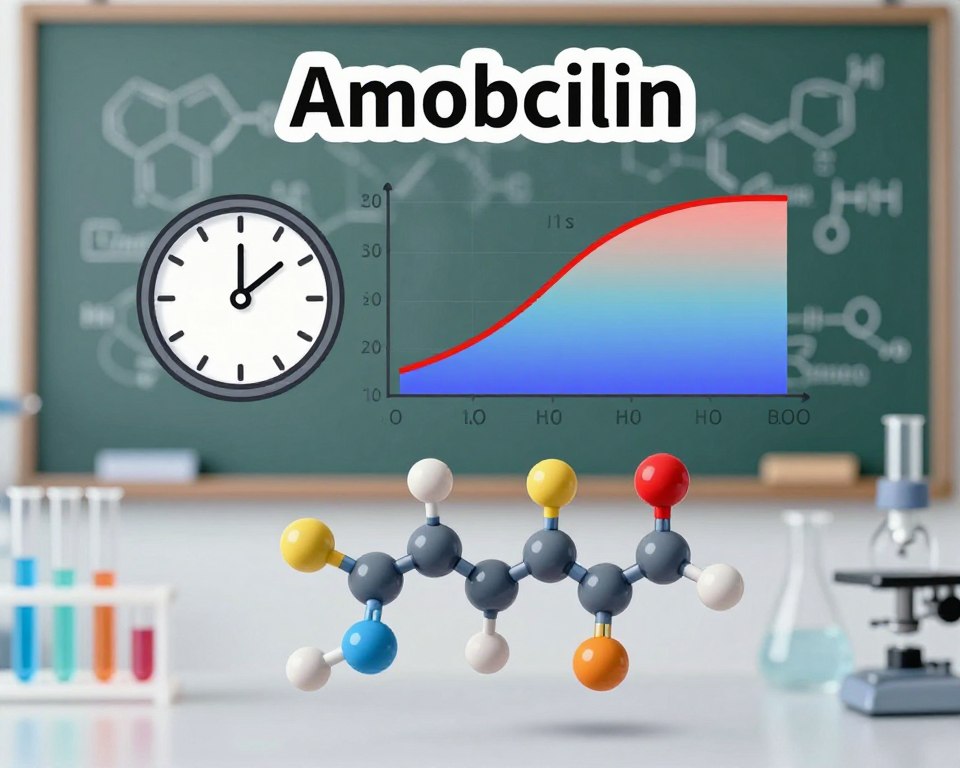
Defining the Half-Life of Amoxicillin
In drug science, half-life is the time it takes for a drug’s blood level to drop by half. For amoxicillin, this time is about 61.3 minutes. This short time is why you might take it several times a day to keep its levels right.
“The half-life of a drug is a fundamental parameter that dictates the frequency of administration required to maintain a steady state within the body.”
What you eat can also affect how your body handles drugs. For example, you might ask if you can have milk with amoxicillin. These foods can change how quickly the drug is absorbed before it’s even eliminated.
Calculating Total Systemic Clearance Time
Doctors use the amoxicillin half-life to figure out how long it takes for the drug to leave your body. Even though it’s only about an hour, it takes several half-lives to get rid of most of it. Usually, it takes about five half-lives for a drug to be mostly gone from your blood.
Many things can change this calculation, like:
- Renal function, which affects how fast it’s filtered.
- Metabolic rate, which differs from person to person.
- Hydration levels, which help the kidneys get rid of it.
By using these models, doctors make sure you get the right amount of drug. This helps fight infections without harming you. Knowing this helps us see why sticking to your treatment schedule is so important.
Factors Influencing Amoxicillin Metabolization Rates
Amoxicillin is mostly excreted unchanged through urine. But, the body also uses certain metabolic pathways to process it. These include oxidation, hydroxylation, and deamination before it’s eliminated. Knowing the amoxicillin metabolization rate helps predict how long it stays active in your body.
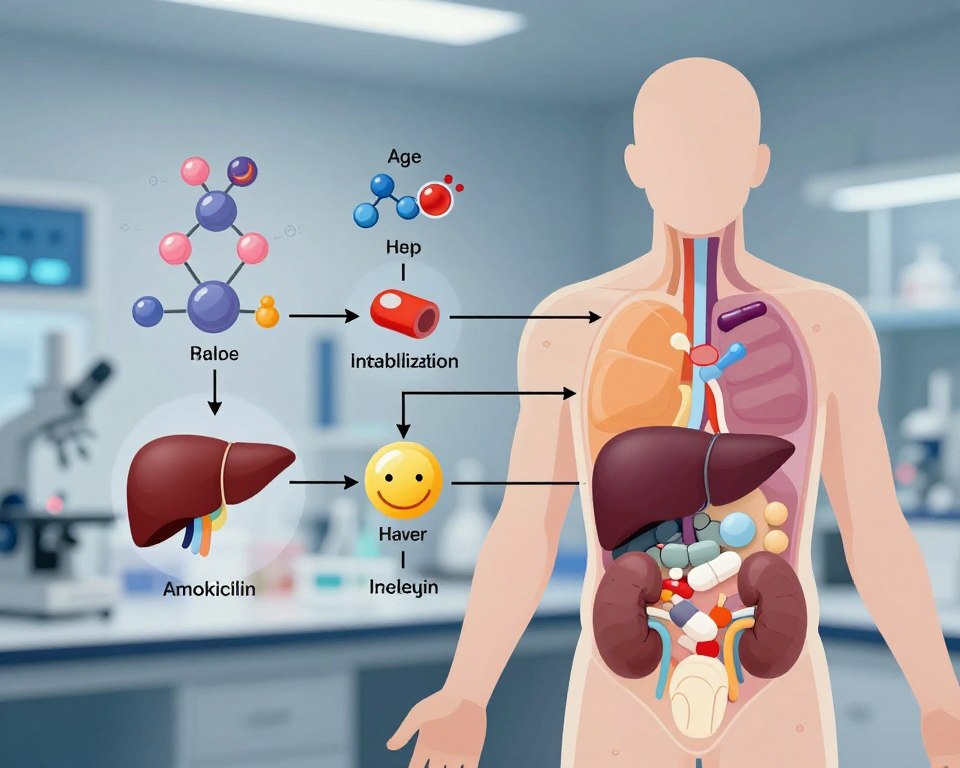
Genetic Predispositions and Metabolic Speed
Your genetic makeup greatly affects how your body handles drugs. Variations in organic anion transporters are key in filtering and clearing amoxicillin from your blood.
Genetic markers can change your amoxicillin metabolization rate from the average. This is why some people clear the drug faster or slower than others.
The Impact of Underlying Health Conditions
The health of your kidneys and liver is key in drug clearance. If these organs are not healthy, your body can’t clear amoxicillin as it should. This often means the drug stays in your system longer.
Conditions like chronic kidney disease or liver problems can make this worse. Professional medical monitoring is essential for these patients. It helps keep drug levels safe and effective during treatment.
The Role of Renal Function in Medication Clearance
Knowing how your kidneys handle antibiotics is key to understanding the amoxicillin clearance time. Your kidneys are the main filter for this drug. Their health affects how fast the drug leaves your body. When kidneys work well, the body gets rid of the antibiotic on schedule.
How Kidneys Filter Amoxicillin
The kidneys filter amoxicillin through glomerular filtration and active tubular secretion. After it enters the blood, it goes to the nephrons for processing. Then, it’s excreted in urine. This process keeps the drug levels safe in healthy people.
But, if kidneys don’t work right, amoxicillin clearance time gets longer. This can lead to severe stomach cramps or other stomach problems. Drinking plenty of water helps the kidneys do their job.
Signs of Impaired Renal Clearance
Doctors check kidney health by looking at the Glomerular Filtration Rate (GFR). If GFR goes down, the body can’t clear drugs as it should. Doctors then adjust the drug doses to avoid harm. People with kidney problems need careful watching during treatment.
“Renal function is the cornerstone of drug metabolism; when the kidneys falter, the entire pharmacokinetic profile of a medication changes, necessitating precise clinical intervention.”
The table below shows how kidney function affects antibiotic dosing:
| Renal Status | GFR (mL/min) | Dosing Strategy |
|---|---|---|
| Normal Function | Above 60 | Standard Protocol |
| Mild Impairment | 30 to 60 | Monitor Closely |
| Moderate Impairment | 10 to 30 | Adjusted Dosing |
| Severe Impairment | Below 10 | Significant Reduction |
Spotting signs of slow clearance is key to keeping patients safe. If you have ongoing symptoms or kidney problems, talk to your doctor. This ensures your amoxicillin clearance time stays safe and effective.
Hepatic Influence and Systemic Processing
Amoxicillin is mainly removed through urine, but the liver also plays a role. Knowing how the amoxicillin metabolization rate works helps us see how organs work together. This is important for getting rid of the drug from your body.
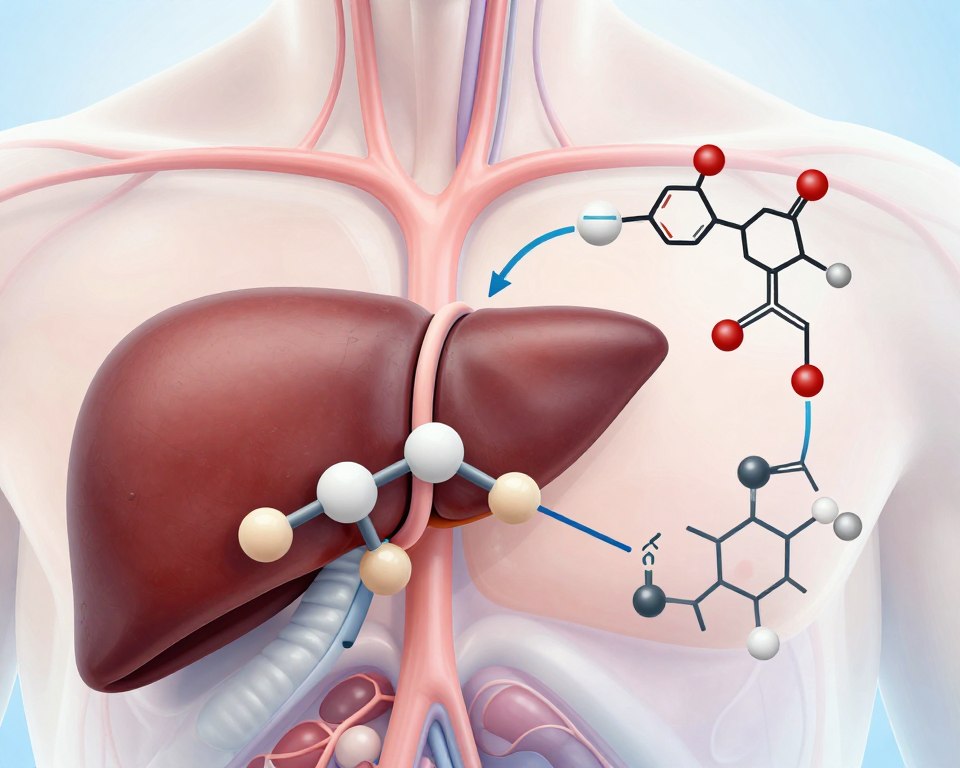
Liver Function and Antibiotic Processing
The liver helps process many substances, but it’s not the main site for amoxicillin. Studies show that doctors don’t usually change the dose for people with liver problems. This is good news for those with liver issues who need antibiotics.
The liver doesn’t change the amoxicillin metabolization rate much. Most of the drug goes through the body without being changed. This means the liver doesn’t have to do a lot to help get rid of it.
Distinguishing Renal vs. Hepatic Pathways
It’s key to know the difference between how kidneys and liver handle drugs. The kidneys are like a filter, while the liver plays a smaller role. This helps us understand how drugs are cleared from the body.
| Pathway | Primary Function | Impact on Clearance |
|---|---|---|
| Renal (Kidneys) | Active filtration and excretion | High impact; primary route |
| Hepatic (Liver) | Metabolic processing | Low impact; secondary route |
| Dosage Adjustment | Often required for impairment | Rarely required |
Understanding these roles helps us see why kidney health is so important. Even though the liver is involved, the kidneys are key to how fast the drug is removed.
Identifying Residual Effects and Possible Side Effects
Many people worry about the difference between natural recovery and Amoxicillin residual effects. They question if symptoms after the last dose are from the drug or the infection itself.
Most people get better without issues, but knowing the difference is key. It helps you track your health with confidence.

Common Post-Treatment Symptoms
After antibiotics, your body might need time to get back to normal. Mild stomach problems are common as your gut adjusts.
Typical symptoms that usually go away on their own include:
- Mild nausea or occasional stomach upset.
- Temporary changes in bowel habits, such as loose stools.
- General fatigue as the body finishes fighting the infection.
When to Seek Medical Attention for Lingering Effects
Minor discomfort is normal, but some symptoms need a doctor’s check. If you notice signs of a serious reaction or a new problem, call your healthcare provider.
Get medical help right away if you see any of these:
- Severe or persistent diarrhea, which may indicate a C. difficile infection.
- Signs of a hypersensitivity reaction, such as hives, skin rashes, or trouble breathing.
- Symptoms of the original infection that get worse or don’t get better after the meds are done.
- High fever or severe abdominal pain that doesn’t go away.
Watching for Amoxicillin residual effects helps you know when to seek help. Always talk to your pharmacist or doctor if you’re unsure about your health.
Distinguishing Between Clearance and Therapeutic Efficacy
It’s important to know the difference between a drug being in your body and how it works. Many people check if Amoxicillin is in their body by the clock. But, the truth is more complex. The drug doesn’t just stop working when it starts to leave your system.
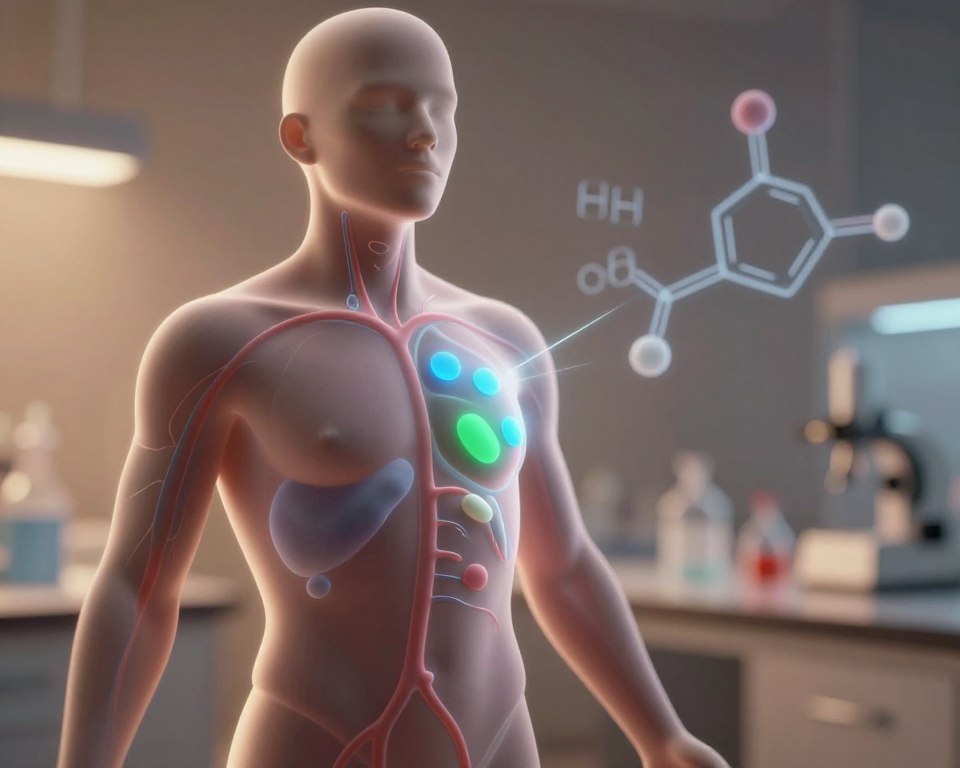
Why the Drug Remains Effective After the Last Dose
Amoxicillin works by a process called time-dependent bactericidal activity. This means it’s most effective when its levels in your blood are high enough to fight bacteria. This level is called the minimum inhibitory concentration (MIC).
Even when your body starts to remove the drug, it keeps working. As long as there’s enough drug left, it can keep stopping bacteria from growing. This is why taking the drug exactly as directed is crucial for success.
The Difference Between Presence and Activity
Many people think that Amoxicillin’s presence in your body means it’s fighting infection. But, the truth is different. The drug can be found in small amounts long after it stops helping.
The table below shows how presence and activity differ during recovery:
| Concept | Clinical Definition | Impact on Infection |
|---|---|---|
| Therapeutic Activity | Concentration above the MIC | Actively kills bacteria |
| Residual Presence | Detectable trace molecules | No significant clinical effect |
| Clearance Phase | Systemic elimination process | Transition to recovery |
Knowing this difference helps patients understand that Amoxicillin’s presence in their body is a complex process. Once the drug’s levels are too low, the body uses its immune system to finish off the bacteria.
Why Completing the Full Course of Antibiotics Matters
Following your antibiotic treatment plan is very important. It’s common to feel better quickly, but stopping too soon can harm you and others. It’s key to finish all the antibiotics you’re given.
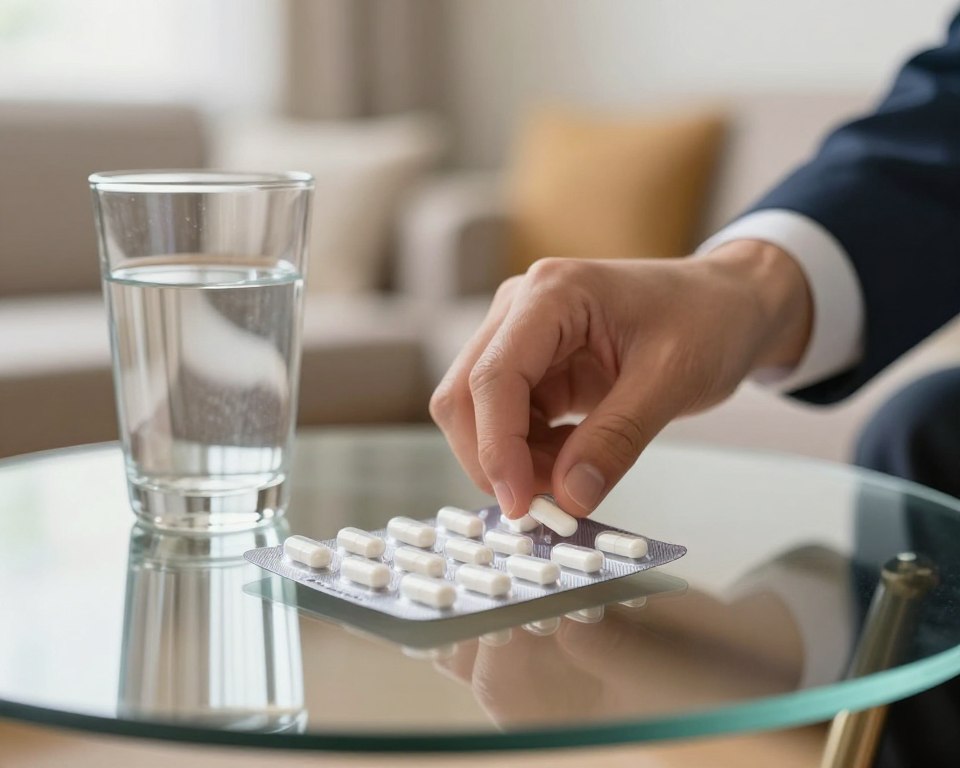
Preventing Antibiotic Resistance
Stopping antibiotics early lets strong bacteria survive. These bacteria can mutate and become resistant to treatments later.
This is called antibiotic resistance and is a big health issue. Finishing all antibiotics helps get rid of these resistant bacteria before they spread.
Ensuring Complete Eradication of Pathogens
The main aim of antibiotics is to remove all infection from your body. Even if you feel better, some bacteria might stay.
Stopping antibiotics too soon can lead to a resurgence of the infection. This second infection is often harder to treat. Always follow your doctor’s advice to ensure the infection is fully cleared.
Managing Possible Withdrawal or Rebound Symptoms
Even though amoxicillin doesn’t cause true withdrawal, some people might feel physical changes after stopping it. It takes time for the body to get back to normal after the medicine is gone. Knowing about the amoxicillin withdrawal period can ease worries during recovery.
Addressing Post-Antibiotic Gut Microbiome Shifts
Antibiotics fight bad bacteria but can upset the good microbes in your gut. This can cause issues like bloating, mild cramps, or bowel changes. These microbiome shifts are common side effects, not signs of addiction.
To help your body, eat gently and drink plenty of water after treatment. Many doctors recommend probiotic foods or supplements to balance your gut. Remember, your digestive system usually gets back to normal quickly.
Differentiating Rebound Infection from Residual Effects
Some people worry about amoxicillin residual effects like lingering fatigue or minor aches. It’s important to tell the difference between normal recovery and a rebound infection. A rebound infection comes back with the same symptoms as before, like fever or pain.
If your symptoms get worse or new ones appear, see your doctor right away. The table below helps you understand the difference between post-treatment symptoms.
| Symptom Type | Residual Effects | Rebound Infection |
|---|---|---|
| Primary Symptoms | Gradually fading | Returning or intensifying |
| Digestive Health | Mild, temporary imbalance | Usually unaffected |
| Energy Levels | Slowly improving | Significant decline |
| Clinical Action | Monitor and hydrate | Contact your doctor |
Interactions That May Alter Elimination Timelines
Certain substances can change how your body gets rid of antibiotics. The usual half-life of a drug is a starting point. But, drug interactions can make the drug stay in your system longer. Knowing about these factors is key to staying safe while you recover.
Common Medications That Affect Clearance
Probenecid is a drug that affects amoxicillin clearance. It’s used for gout but impacts kidney function. This changes how the kidneys handle other substances.
Probenecid blocks the kidneys’ ability to filter out the antibiotic. This means the antibiotic stays in your blood longer. It may unintentionally make the treatment last longer or raise the risk of side effects.
Dietary Supplements and Their Possible Interference
Dietary supplements can also affect how your body breaks down drugs. Research on herbal interactions with antibiotics is ongoing. Any substance that changes renal function or liver enzyme activity can affect drug clearance.
Some supplements might make you pee more or change your urine’s pH. This could theoretically affect how fast you clear certain compounds. It’s highly recommended to talk to a healthcare provider or pharmacist before adding new supplements. They can tell you if a product might interfere with your treatment or keep the drug in your system longer.
Hydration and Lifestyle Factors During Recovery
Supporting your body during the elimination phase is simple. It involves consistent habits. The amoxicillin duration in system mainly depends on your kidneys. But, your daily choices can help your body get back to normal.
The Importance of Fluid Intake for Renal Excretion
Your kidneys filter most of the medication from your blood. Drinking enough water helps them work well. This ensures they can process and remove the drug efficiently.
Drinking water all day keeps the kidneys working right. This simple habit helps clear waste and keeps your body balanced.
Supporting the Body During the Elimination Phase
Good nutrition and enough sleep are key for recovery. These help your immune system get back in balance after the infection is gone.
It’s also important to handle your meds right. Liquid amoxicillin has a limited shelf life. You should use it within 14 days of getting it from the pharmacy.
Using old meds is not good and can be risky. By following these tips, you can manage the amoxicillin duration in system. This ensures your body heals well.
Medical Review and Professional Guidance Standards
Your health and safety are our top priorities. This article was written by a licensed Master Pharmacist. It also went through a detailed scientific review by another licensed Master Pharmacist. An actively practicing physician checked it to make sure it meets high standards.
The Role of Licensed Pharmacists in Patient Care
Pharmacists are key players in your healthcare. They do more than just give out medicine. They act as vital safety checkpoints for both patients and healthcare providers.
- They check if the medication dosage is right for you.
- They look for drug or nutrient interactions that could affect your health.
- They teach you how to handle side effects.
- They watch for signs of bad reactions during treatment.
Limitations of General Informational Content
The information on this platform is for general use only. It’s not a replacement for personal medical advice or treatment plans from your doctor.
Every person is different, with their own health history and genetic makeup. So, always talk to your doctor or a registered pharmacist before changing your medication. We aim to give you evidence-based advice. But your doctor knows what’s best for you.
Image Disclosure and Educational Content Integrity
We at WhatIsThisMed.com are all about being open about our images. We use different types of media to explain complex medical ideas in simple terms. This way, we help people understand how medicines work in their bodies.
Understanding AI-Generated Educational Visuals
Some of our images might be made by AI or edited digitally. These illustrative tools help explain hard-to-understand biological processes. But remember, these images are for learning only and not for diagnosing yourself.
If you’re worried about your health or symptoms, talk to a doctor. Our images are here to help you learn, not to give medical advice. Always get advice from a healthcare expert to make sure you’re making safe choices based on verified medical data.
Commitment to Accurate Medical Communication
We’re dedicated to sharing accurate medical information. Every piece of content, including our images, is checked carefully to make sure it’s up-to-date and correct. We aim to keep our educational materials trustworthy and safe for our readers.
| Visual Type | Primary Purpose | Clinical Limitation |
|---|---|---|
| AI-Generated Graphics | Conceptual Illustration | Not for Diagnosis |
| Anatomical Diagrams | Structural Education | Not for Self-Assessment |
| Pharmacological Charts | Data Visualization | Requires Professional Context |
We want to help our audience make smart choices. We think clear communication is key to keeping patients safe and managing their health well.
Conclusion
Understanding how medicines work in your body is key to recovery. Amoxicillin’s short half-life means it’s quickly removed from your system. This happens right after you finish your treatment.
Knowing when Amoxicillin is no longer in your body helps you see when you’re fully recovered. Even though it’s gone in hours, your body keeps healing. This is thanks to your immune system.
Don’t worry about withdrawal from Amoxicillin. It’s not a common concern for this antibiotic. Instead, take care of your gut and stay hydrated. This helps your body get back to normal after the infection.
If you feel off after your last dose, talk to your doctor or pharmacist. They can offer the best advice for your health. They’ll help you feel better and answer any health questions you have.
FAQ
How Long Does Amoxicillin Stay in Your System After the Last Dose?
In most healthy adults, Amoxicillin is cleared from the bloodstream within about 12 hours. This is because of its short half-life and quick excretion by the kidneys.
What factors influence the Amoxicillin clearance time?
Kidney function is the biggest factor. Other things like age, how hydrated you are, and other medications can also affect it.
Does the Amoxicillin half-life change if I take a higher dose?
No, the half-life of Amoxicillin stays the same at about 61.3 minutes, even with a higher dose, if your kidneys work well. But, a bigger dose means more drug to get rid of, which might make it detectable for a bit longer.
Are there common Amoxicillin residual effects after I stop taking it?
Yes, some people might feel mild stomach issues like diarrhea or bloating after stopping. These effects are usually because of changes in the gut’s bacteria, not because the drug is active anymore.
Is there such a thing as an Amoxicillin withdrawal period?
No, antibiotics don’t cause withdrawal. But, it might take a few days for your gut’s bacteria to get back to normal after the drug is gone.
How does the Amoxicillin metabolization rate affect my recovery?
A normal metabolization rate keeps the drug from becoming too toxic while it fights bacteria. If your kidneys are slower, your doctor will adjust your dose to keep you safe.
Can I speed up the Amoxicillin duration in system?
You can’t change the drug’s half-life much. But, drinking enough water helps your kidneys get rid of it faster.
Why is the Amoxicillin elimination timeline important for surgery or other tests?
Knowing when Amoxicillin is gone helps doctors avoid problems with surgery or lab tests. It makes sure the antibiotic won’t mess with important medical procedures.