
✍️ Written by Dimitar Georgiev Atanasov, MPharm
Master Pharmacist | Medication Safety Educator
Bulgarian Pharmaceutical Union (BPhU)
UIN: 0210000586
👨⚕️ Medical Review by Dr. Tania Georgieva-Stoianova, MD
General Practitioner
25+ Years of Clinical Experience
Actively Practicing Physician
UIN: 2900000451
💊 Pharmacy & Scientific Review by Gergana Krasimirova Atanasova, MPharm
Assistant Lecturer, Faculty of Pharmacy
University “Prof. Dr. Asen Zlatarov” – Burgas
Master Pharmacist
Bulgarian Pharmaceutical Union (BPhU)
UIN: 0210000587
Quick Answer
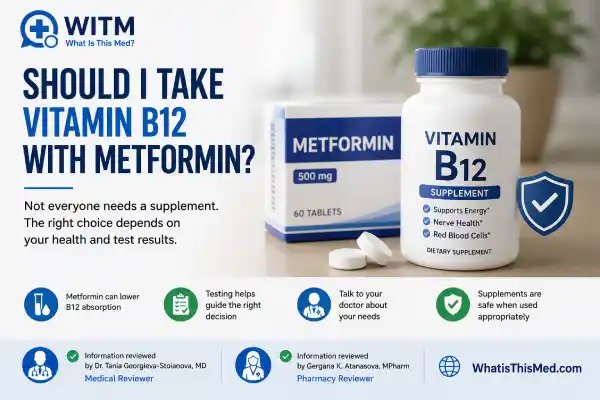
Not everyone taking metformin needs a vitamin B12 supplement. However, long-term metformin use can reduce vitamin B12 absorption, increasing the risk of deficiency in some people. Your doctor may recommend vitamin B12 supplements if blood tests show low levels, if you develop symptoms such as fatigue or numbness, or if you have additional risk factors for deficiency.
The best approach is individualized care. Rather than starting supplements automatically, discuss your symptoms, diet, and medical history with your healthcare provider to determine whether vitamin B12 supplementation is appropriate.
Physician Quick Take
Vitamin B12 supplementation is not routinely recommended for every person taking metformin. Instead, healthcare providers consider factors such as treatment duration, laboratory results, dietary intake, age, and symptoms before recommending supplementation. When vitamin B12 deficiency is identified, treatment is usually simple and allows most patients to continue taking metformin safely.
Many patients purchase vitamin B12 supplements after reading online that metformin “causes” vitamin B12 deficiency. While this concern is understandable, supplementation should ideally be guided by your healthcare provider. Choosing the right supplement and determining whether you actually need one—is often more important than simply buying the first product available.
Should I Take Vitamin B12 With Metformin?
Key Takeaways
✔ Long-term metformin therapy may reduce vitamin B12 absorption.
✔ Most people taking metformin do not automatically need vitamin B12 supplements.
✔ Blood testing can help determine whether supplementation is necessary.
✔ Symptoms such as fatigue, tingling, numbness, or unexplained weakness may warrant evaluation.
✔ Vitamin B12 supplements are generally safe but should still be used appropriately.
✔ Never stop taking metformin or begin high-dose supplementation without speaking to your healthcare provider.
Why Do So Many People Ask This Question?
If you’ve recently started metformin, you’ve probably come across articles or social media posts claiming that everyone taking the medication should also take vitamin B12.
Some patients even purchase supplements before taking their very first metformin tablet.
This raises an important question:
Is vitamin B12 really necessary for everyone taking metformin?
The answer is more nuanced than many headlines suggest.
Although metformin has been associated with vitamin B12 deficiency for decades, this doesn’t mean every patient will become deficient or benefit from supplementation. Understanding who is most likely to develop low vitamin B12 levels—and who may not need supplements at all—is the key to making an informed decision.
Why Is Vitamin B12 Important?
Vitamin B12 is an essential nutrient that supports several vital functions throughout the body.
It plays an important role in:
- Healthy nerve function
- Red blood cell production
- DNA synthesis
- Brain health
- Energy metabolism
- Cell growth and repair
Unlike some vitamins that must be consumed every day, vitamin B12 is stored in the liver. These stores can often last for several years, which explains why deficiency usually develops slowly rather than suddenly.
When vitamin B12 levels gradually decline, symptoms may be subtle at first but can become more significant if the deficiency remains untreated.
Why Does Metformin Affect Vitamin B12?
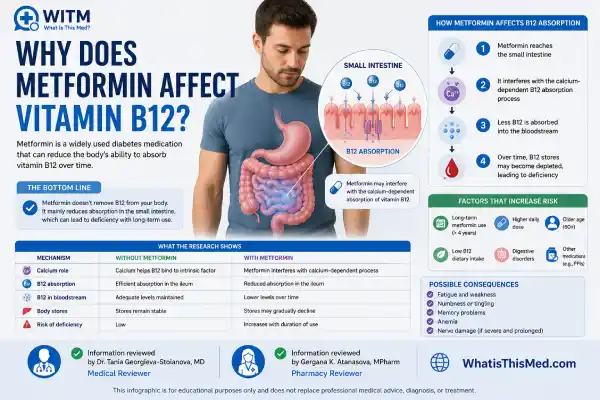
One of the most common misconceptions is that metformin destroys vitamin B12.
Fortunately, this is not true.
Instead, research suggests that metformin reduces the body’s ability to absorb vitamin B12 from food.
Although scientists continue to investigate the exact biological mechanism, the overall effect is well established.
Over time, slightly less vitamin B12 is absorbed during digestion. If this reduced absorption continues for many years, the body’s vitamin B12 stores may eventually become depleted.
Because this process happens gradually, many patients take metformin for years before any signs of deficiency appear.
Does Everyone Taking Metformin Need Vitamin B12?
This is perhaps the most important question—and the answer is no.
Not every person taking metformin develops vitamin B12 deficiency.
Several factors influence an individual’s risk, including:
- Daily metformin dose
- Duration of treatment
- Age
- Dietary habits
- Gastrointestinal health
- Existing vitamin B12 stores
- Other medications affecting vitamin B12 absorption
Some patients maintain completely normal vitamin B12 levels despite taking metformin for many years.
Others may develop deficiency much sooner because they have additional risk factors.
This is why most physicians recommend an individualized approach rather than universal supplementation.
Table: Who May Benefit From Vitamin B12 Evaluation?
| Patient Group | Why Evaluation May Be Helpful |
|---|---|
| Long-term metformin users | Risk increases with treatment duration |
| Older adults | Vitamin B12 absorption naturally decreases with age |
| Vegetarians and vegans | Lower dietary vitamin B12 intake |
| Patients with fatigue | Deficiency may contribute to symptoms |
| People with numbness or tingling | Possible neurological effects of deficiency |
| Patients with anemia | Vitamin B12 deficiency is one possible cause |
| Individuals with digestive disorders | Reduced nutrient absorption may increase risk |
Remember that belonging to one of these groups does not necessarily mean you need supplements. It simply means that discussing vitamin B12 testing with your healthcare provider may be worthwhile.
What Do Current Medical Guidelines Recommend?
Modern diabetes guidelines do not recommend that every patient starting metformin should automatically receive vitamin B12 supplements.
Instead, professional organizations encourage healthcare providers to remain aware of the association between long-term metformin therapy and reduced vitamin B12 levels.
Patients who develop symptoms suggestive of deficiency—or who have additional risk factors—may benefit from vitamin B12 testing.
This approach avoids unnecessary supplementation while ensuring that true deficiencies are identified and treated promptly.
Should You Start Taking Vitamin B12 on Your Own?
Many over-the-counter vitamin B12 supplements are widely available, making it tempting to start taking them without consulting a healthcare professional.
However, self-supplementation is not always the best approach.
Before starting any supplement, it is worth asking:
- Do I actually have vitamin B12 deficiency?
- Have my vitamin B12 levels ever been checked?
- Could another condition explain my symptoms?
- Am I taking any medications that may affect vitamin B12 absorption?
- Would my healthcare provider recommend monitoring instead of supplementation?
For many people, these questions are more important than simply deciding whether to buy a supplement.
Can Taking Vitamin B12 Prevent Future Problems?
Possibly but only in the right situation.
If vitamin B12 levels begin to decline, early identification and appropriate treatment may help reduce the likelihood of developing complications such as:
- Persistent fatigue
- Weakness
- Peripheral neuropathy
- Tingling sensations
- Balance problems
- Megaloblastic anemia
The goal of supplementation is not simply to increase vitamin levels, but to maintain healthy body stores and prevent deficiency-related complications when appropriate.
Which Vitamin B12 Supplement Is Best?
One of the first questions patients ask after learning about metformin and vitamin B12 is:
“If I need a supplement, which one should I buy?”
The answer depends on several factors, including your vitamin B12 level, symptoms, medical history, and your healthcare provider’s recommendation.
Most over-the-counter supplements contain one of two forms of vitamin B12:
- Cyanocobalamin
- Methylcobalamin
Both are effective for treating or preventing vitamin B12 deficiency in many patients, but they are not identical.
Cyanocobalamin vs Methylcobalamin
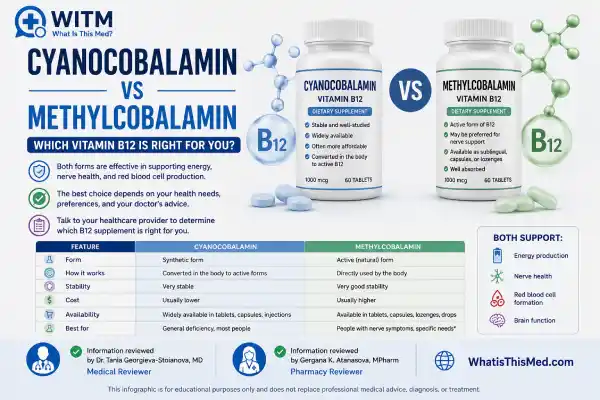
These two forms often cause confusion because marketing materials sometimes claim that one is dramatically superior to the other.
Current scientific evidence is more balanced.
Cyanocobalamin
Cyanocobalamin is the most commonly used form worldwide.
It is:
- Well studied
- Stable
- Widely available
- Often less expensive
- Commonly used in clinical practice
Once absorbed, the body converts cyanocobalamin into active forms that can be used by cells.
Methylcobalamin
Methylcobalamin is one of the naturally active forms of vitamin B12.
It is frequently marketed as a “more natural” option.
Potential advantages include:
- Already biologically active
- Popular among patients with neurological symptoms
- Available in many oral and sublingual products
However, current evidence has not consistently demonstrated that methylcobalamin is clinically superior for most people with vitamin B12 deficiency.
Table: Comparing Common Forms of Vitamin B12
| Feature | Cyanocobalamin | Methylcobalamin |
|---|---|---|
| Scientific evidence | Extensive | Extensive |
| Cost | Usually lower | Often higher |
| Stability | Excellent | Very good |
| Prescription availability | Common | Less common in some countries |
| OTC availability | Excellent | Excellent |
For most patients, the choice depends more on individual circumstances and medical advice than on marketing claims.
Can You Get Enough Vitamin B12 From Food Alone?
Sometimes but not always.
Many people taking metformin wonder whether improving their diet is enough to prevent deficiency.
Foods naturally rich in vitamin B12 include:
- Beef
- Liver
- Chicken
- Salmon
- Tuna
- Sardines
- Eggs
- Milk
- Cheese
- Yogurt
A balanced diet is important for overall health.
However, if metformin has already reduced vitamin B12 absorption significantly, eating more vitamin B12-rich foods may not completely correct the deficiency.
This is why dietary changes and supplementation are not always interchangeable.
Can You Take Too Much Vitamin B12?
Vitamin B12 has a very good safety profile.
Unlike certain fat-soluble vitamins that can accumulate in the body, excess vitamin B12 is generally excreted in the urine.
For most healthy adults, toxicity from vitamin B12 supplementation is extremely uncommon.
However, “safe” does not necessarily mean “necessary.”
Taking large doses without a medical reason may increase costs without providing additional health benefits.
Healthcare providers generally recommend supplementation when there is:
- Laboratory-confirmed deficiency
- High clinical suspicion
- Increased risk of deficiency
- A documented medical indication
Using supplements because they are needed not simply because they are available is usually the most sensible approach.
Should You Take Vitamin B12 Every Day?
The answer depends on why you are taking it.
Some people use vitamin B12 to treat an existing deficiency, while others take it to prevent deficiency because of increased risk.
The appropriate dose and schedule vary according to:
- Blood vitamin B12 level
- Severity of deficiency
- Underlying medical condition
- Age
- Other medications
- Physician recommendation
Rather than following advice from social media or online forums, it is best to follow an individualized treatment plan developed with your healthcare provider.
When Is the Best Time to Take Vitamin B12 With Metformin?
Many patients worry that vitamin B12 and metformin should never be taken together.
Fortunately, there is no evidence that they must be separated by several hours.
Most people can take vitamin B12 at whatever time of day is easiest to remember.
Some prefer taking both medications together with breakfast.
Others take vitamin B12 in the morning and metformin with lunch or dinner.
Consistency is usually more important than the exact timing.
Choosing a routine that you can maintain every day helps improve long-term adherence.
Table: Common Questions About Taking Vitamin B12 With Metformin
| Question | General Answer |
|---|---|
| Can I take vitamin B12 with metformin? | Yes, in most cases. |
| Should I separate the doses? | Usually not necessary. |
| Is morning better than evening? | Either may be appropriate. |
| Should vitamin B12 be taken with food? | Follow the product instructions or your healthcare provider’s advice. |
| Should I stop metformin while taking vitamin B12? | No, unless instructed by your healthcare provider. |
Do Vitamin B12 Supplements Interact With Metformin?

One of the reassuring aspects of vitamin B12 supplementation is that it does not have a clinically significant interaction with metformin.
In fact, vitamin B12 supplementation is sometimes recommended specifically because metformin can reduce vitamin B12 absorption over time.
However, this does not mean that every supplement is appropriate for every patient.
If you take multiple medications or have chronic medical conditions, your physician or pharmacist can help ensure that your overall treatment plan remains safe and effective.
Are Vitamin B12 Injections Better Than Tablets?
Many people assume that injections are always superior.
This is another common misconception.
In reality, the choice depends on the individual patient.
For mild deficiency, many people respond very well to oral vitamin B12 supplements.
Injections may be considered when:
- Deficiency is severe
- Neurological symptoms are present
- Absorption problems are significant
- Rapid correction is needed
- Your healthcare provider believes injections are the most appropriate option
Both treatment approaches can be highly effective when used appropriately.
Can Vitamin B12 Improve Fatigue Immediately?
Patients are often disappointed if they do not feel better after taking only a few tablets.
Vitamin B12 is not an instant energy booster.
If fatigue is caused by vitamin B12 deficiency, improvement usually occurs gradually as body stores recover.
Recovery time varies from person to person and depends on factors such as:
- Severity of deficiency
- Duration of deficiency
- Presence of anemia
- Overall health
- Other medical conditions
It’s also important to remember that fatigue has many possible causes.
If vitamin B12 levels are normal, another explanation for your symptoms may need to be investigated.
Who Should Definitely Talk to Their Doctor About Vitamin B12?

Although not everyone taking metformin requires vitamin B12 supplements, some people should discuss vitamin B12 testing or supplementation with their healthcare provider.
This is particularly important if you:
- Have been taking metformin for several years
- Take higher daily doses of metformin
- Follow a vegetarian or vegan diet
- Are over 60 years of age
- Have Crohn’s disease or celiac disease
- Have had stomach or intestinal surgery
- Take proton pump inhibitors (PPIs) such as omeprazole or pantoprazole for long periods
- Have previously been diagnosed with vitamin B12 deficiency
Most importantly, speak with your healthcare provider if you develop symptoms that could suggest vitamin B12 deficiency.
Warning Signs That Should Not Be Ignored
Vitamin B12 deficiency often develops gradually.
Because symptoms can be subtle, many people attribute them to aging, diabetes, stress, or simply being busy.
However, persistent symptoms deserve medical evaluation.
Possible warning signs include:
- Constant fatigue
- Low energy
- Unexplained weakness
- Tingling in the hands
- Tingling in the feet
- Numbness
- Burning sensations in the feet
- Poor balance
- Difficulty walking
- Memory problems
- Brain fog
- Difficulty concentrating
- Pale skin
- Shortness of breath during activity
These symptoms do not automatically mean you have vitamin B12 deficiency, but they should not be ignored—especially if you have been taking metformin for a long time.
Table: Symptoms That May Warrant Vitamin B12 Testing
| Symptom | Could Vitamin B12 Deficiency Be a Possible Cause? |
|---|---|
| Persistent fatigue | Yes |
| Tingling in hands or feet | Yes |
| Numbness | Yes |
| Poor balance | Yes |
| Weakness | Yes |
| Brain fog | Yes |
| Memory problems | Yes |
| Megaloblastic anemia | Yes |
| Diabetic neuropathy symptoms | Sometimes—other causes should also be considered |
Remember that these symptoms have many possible causes. Proper medical evaluation is essential before assuming vitamin B12 deficiency is responsible.
Common Myths About Vitamin B12 and Metformin
Misinformation spreads quickly online.
Let’s separate facts from fiction.
Myth #1: Everyone Taking Metformin Needs Vitamin B12
Fact
Most people taking metformin never develop clinically significant vitamin B12 deficiency.
Healthcare providers usually recommend individualized assessment rather than automatic supplementation.
Myth #2: Metformin Permanently Damages Vitamin B12 Levels
Fact
Metformin reduces vitamin B12 absorption over time, but deficiency is usually reversible with appropriate treatment.
Myth #3: Vitamin B12 Supplements Replace Healthy Eating
Fact
Supplements may help correct deficiency, but they do not replace a balanced diet rich in essential nutrients.
Myth #4: Fatigue Always Means Low Vitamin B12
Fact
Fatigue can result from dozens of different medical conditions.
Vitamin B12 deficiency is only one possible explanation.
Myth #5: Vitamin B12 Gives Everyone More Energy
Fact
Vitamin B12 is not an energy drink.
People with normal vitamin B12 levels generally do not experience dramatic energy boosts simply by taking supplements.
Table: Myths vs Facts
| Myth | Reality |
|---|---|
| Everyone needs vitamin B12 with metformin. | Supplementation should be individualized. |
| Metformin destroys vitamin B12. | It mainly reduces absorption over time. |
| Supplements replace healthy eating. | Diet remains an important part of overall health. |
| Fatigue always means vitamin B12 deficiency. | Many conditions can cause fatigue. |
| More vitamin B12 is always better. | Supplements should be taken when medically appropriate. |
Physician Takeaway
Long-term metformin therapy is associated with an increased risk of vitamin B12 deficiency, but routine supplementation is not necessary for every patient.
Instead, physicians evaluate individual risk factors, symptoms, dietary habits, and laboratory findings before recommending vitamin B12 supplementation.
Patients who experience persistent fatigue, numbness, tingling, or unexplained anemia should discuss vitamin B12 testing with their healthcare provider rather than stopping metformin on their own.
Pharmacist Takeaway
As pharmacists, one of the most common questions we hear is:
“Should I start taking vitamin B12 because I’m on metformin?”
For many patients, the answer depends on more than simply taking metformin.
Duration of treatment, dose, age, diet, symptoms, and laboratory results all play an important role.
A pharmacist can help explain the differences between available vitamin B12 supplements, answer questions about proper use, and work alongside your physician to support safe, evidence-based medication management.
Clinical Evidence
The relationship between metformin and vitamin B12 deficiency has been recognized for decades and is supported by a substantial body of scientific evidence.
Multiple observational studies, randomized clinical trials, systematic reviews, and meta-analyses have demonstrated that long-term metformin therapy may reduce vitamin B12 absorption and increase the likelihood of biochemical deficiency in susceptible individuals.
Because of these findings, several professional organizations recommend considering periodic vitamin B12 assessment in patients receiving long-term metformin therapy, particularly when symptoms or additional risk factors are present.
Current evidence supports monitoring and individualized treatment, rather than universal supplementation for every patient taking metformin.
Bottom Line
Most people taking metformin do not automatically need vitamin B12 supplements.
However, long-term metformin use can reduce vitamin B12 absorption, increasing the risk of deficiency in some individuals.
The best approach is not to self-diagnose or start supplements based solely on information found online.
Instead, discuss your individual risk factors, symptoms, and the possibility of vitamin B12 testing with your healthcare provider.
When deficiency is identified early, treatment is usually straightforward and allows most patients to continue benefiting from metformin while maintaining healthy vitamin B12 levels.
Frequently Asked Questions – Should I Take Vitamin B12 With Metformin
Should everyone taking metformin take vitamin B12?
No. Supplementation should be based on your individual risk factors, symptoms, and laboratory results.
Can I take vitamin B12 every day with metformin?
Many people can, but whether you should depends on your individual circumstances and your healthcare provider’s recommendation.
Which vitamin B12 supplement is best?
Both cyanocobalamin and methylcobalamin are widely used. The most appropriate choice depends on your medical situation and professional advice.
Does vitamin B12 stop metformin side effects?
Vitamin B12 may help treat deficiency-related symptoms but does not prevent all side effects associated with metformin.
Can I take vitamin B12 and metformin at the same time?
Yes. In most cases, they can be taken together.
Will vitamin B12 improve my energy immediately?
Not necessarily. If fatigue is caused by vitamin B12 deficiency, improvement usually occurs gradually after appropriate treatment.
Can vitamin B12 prevent nerve damage?
Treating vitamin B12 deficiency early may help prevent or limit neurological complications associated with prolonged deficiency.
Should I ask my doctor for a vitamin B12 blood test?
If you have been taking metformin for several years or develop symptoms such as fatigue, numbness, tingling, or weakness, discussing testing with your healthcare provider is reasonable.
Are vitamin B12 injections better than tablets?
Not always. Many people respond well to oral supplements, while injections may be recommended for more severe deficiency or significant absorption problems.
Can I stop taking metformin if I start vitamin B12?
No. Never stop or change your prescribed medication without consulting your healthcare provider.
Explore More Metformin Guides
Continue learning with our evidence-based metformin articles:
- Why Am I Tired After Taking Metformin?
- Can Metformin Cause Vitamin B12 Deficiency?
- Can Metformin Cause Brain Fog?
- Why Does Metformin Cause Diarrhea at Night?
- Why Do I Feel Weak After Taking Metformin?
- Can I Drink Coffee While Taking Metformin?
- Can I Take Metformin With Magnesium?
- Can I Stop Taking Metformin Suddenly?
Medical Disclaimer
The information provided in this article is for educational purposes only and should not replace professional medical advice, diagnosis, or treatment. Always consult your physician, pharmacist, or another qualified healthcare professional before starting, stopping, or changing any medication or dietary supplement.
Sources
- American Diabetes Association. Standards of Care in Diabetes.
- National Institute for Health and Care Excellence (NICE). Type 2 Diabetes Guidelines.
- U.S. Food and Drug Administration (FDA). Metformin Prescribing Information.
- UK Medicines and Healthcare products Regulatory Agency (MHRA). Metformin and Reduced Vitamin B12 Levels: New Advice for Monitoring Patients at Risk.
- National Institutes of Health (NIH) Office of Dietary Supplements. Vitamin B12 Fact Sheet for Health Professionals.
- PubMed – Clinical studies on metformin-associated vitamin B12 deficiency.
- Cochrane Library.
- European Medicines Agency (EMA).
- British National Formulary (BNF).
Image Disclosure – Should I Take Vitamin B12 With Metformin?
Some images used in this article are AI-generated or custom educational illustrations created to improve understanding of medication-related topics. They are intended for educational purposes only and do not depict actual patients or clinical situations.